Shattered trust: The written and unwritten rules of journalism ethics
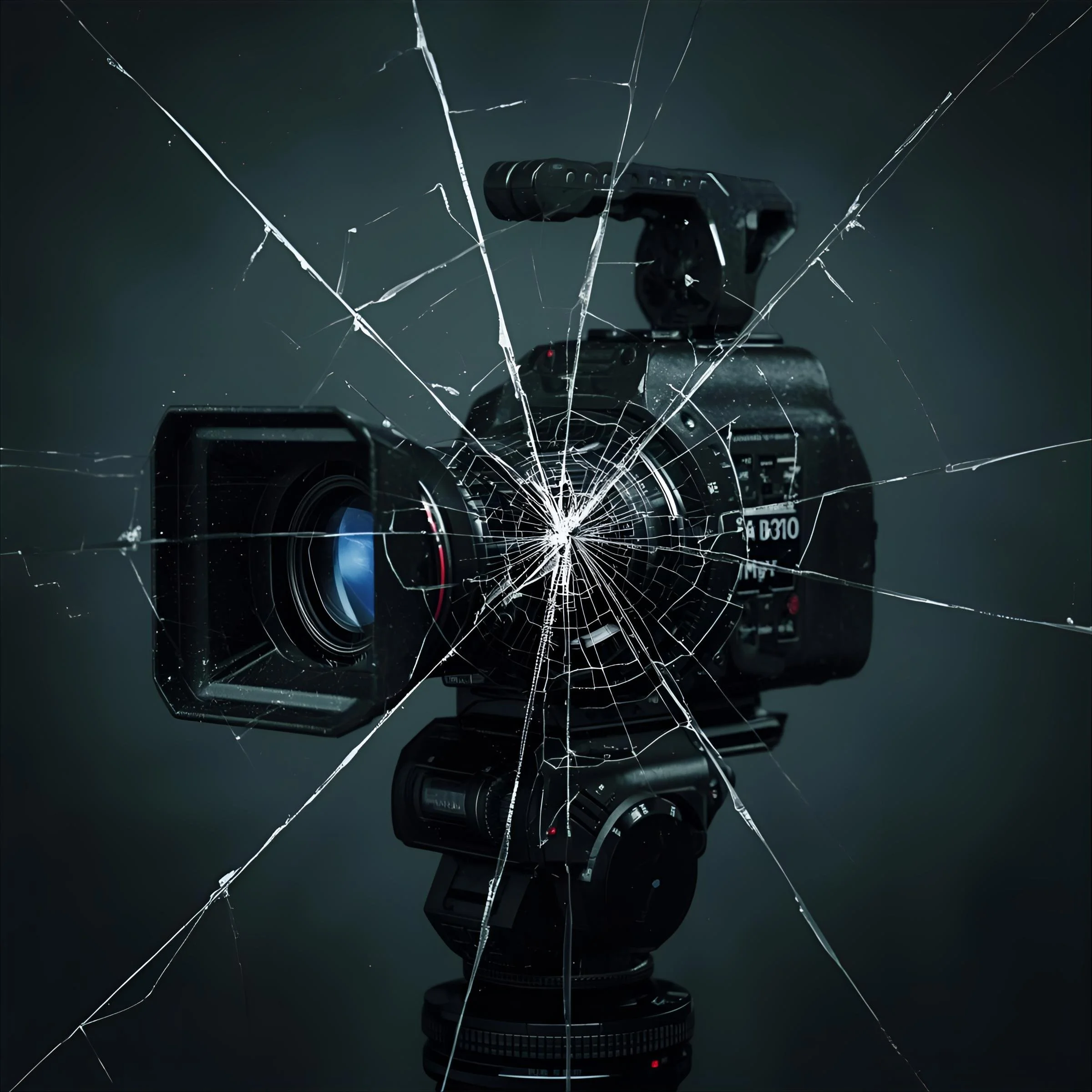
Broken Lens: A visual metaphor for fractured trust between the public and journalism in 2025. // Created by Hollyann Preisel using Canva’s Magic Media tool.
Cameras used to draw people in. Now, they often make people turn away. That small shift reflects journalism’s larger problem: not the loss of ethics, but the collapse of trust in them.
That collapse shows up in smaller ways too. Think about scrolling through your feed and pausing on breaking headlines. Do you wonder if it’s true, or who paid to put it there? That doubt is part of the crisis.
For most professional journalists, ethics aren’t disappearing; the public’s trust in them is. Audiences often can’t see where the boundaries are—what separates news from opinion, or fact from advertising or AI. That uncertainty fuels the work of Lynn Walsh, assistant director of Trusting News, a nonprofit founded in 2016 to help newsrooms build trust through research and training.
Walsh, who is also the former president of the Society of Professional Journalists in 2016 and 2017, calls this distrust cultural, not practical. She says people doubt journalism simply because others do. It’s a bandwagon effect. “It doesn’t necessarily have anything to do with journalism, the way we operate,” Walsh says. “It has a lot more to do with politicians, people in power.”
That distrust feeds into persisting newsroom dilemmas: minimizing harm, balancing speed with accuracy, separating news from opinion, disclosing AI, and defining accountability at local versus national levels. Together, these tensions define journalism’s credibility crisis in 2025; not the absence of ethics, but the struggle for journalists to show the public that those ethics are being upheld.
The principles are well-documented and have been for some time. The Associated Press has its current Statement of News Values and Principles, but its roots go back to early efforts in guiding reporters, including the 1903 pocket circulars and “Reporter’s Manual”. The New York Times publishes its Handbook of Values and Practices, with its earlier guidelines, a newsroom “style book,” dating back to before 1928. The Washington Post outlines its Policies and Standards, which can be traced back to the 1970s, with the institutional ethical norms established under executive editor Ben Bradlee during Watergate. The Society of Professional Journalists took a broader approach in 1973 with its Code of Ethics, which is built on four pillars: truth, minimizing harm, independence, and accountability. These longstanding playbooks outline how to act or write in specific situations.
Today, journalists face numerous pressing ethical issues. Some of the most common are trust, transparency, and minimizing harm, particularly when dealing with victims.
For example, Michael Koretzky, chair of the Society of Professional Journalists’ Ethics Committee, discusses the ethical disagreements around deadnaming—when a journalist is covering a transgender person’s story but must also reference earlier court documents under the individual’s former name. “Sometimes there’s no agreement,” Koretzky says. “We’ll tell the journalist what people on the committee said, and they have to take that guidance as they will.” The example shows how ethics can extend past what’s written, beyond the guidelines and into the gray spaces of language, identity and harm.
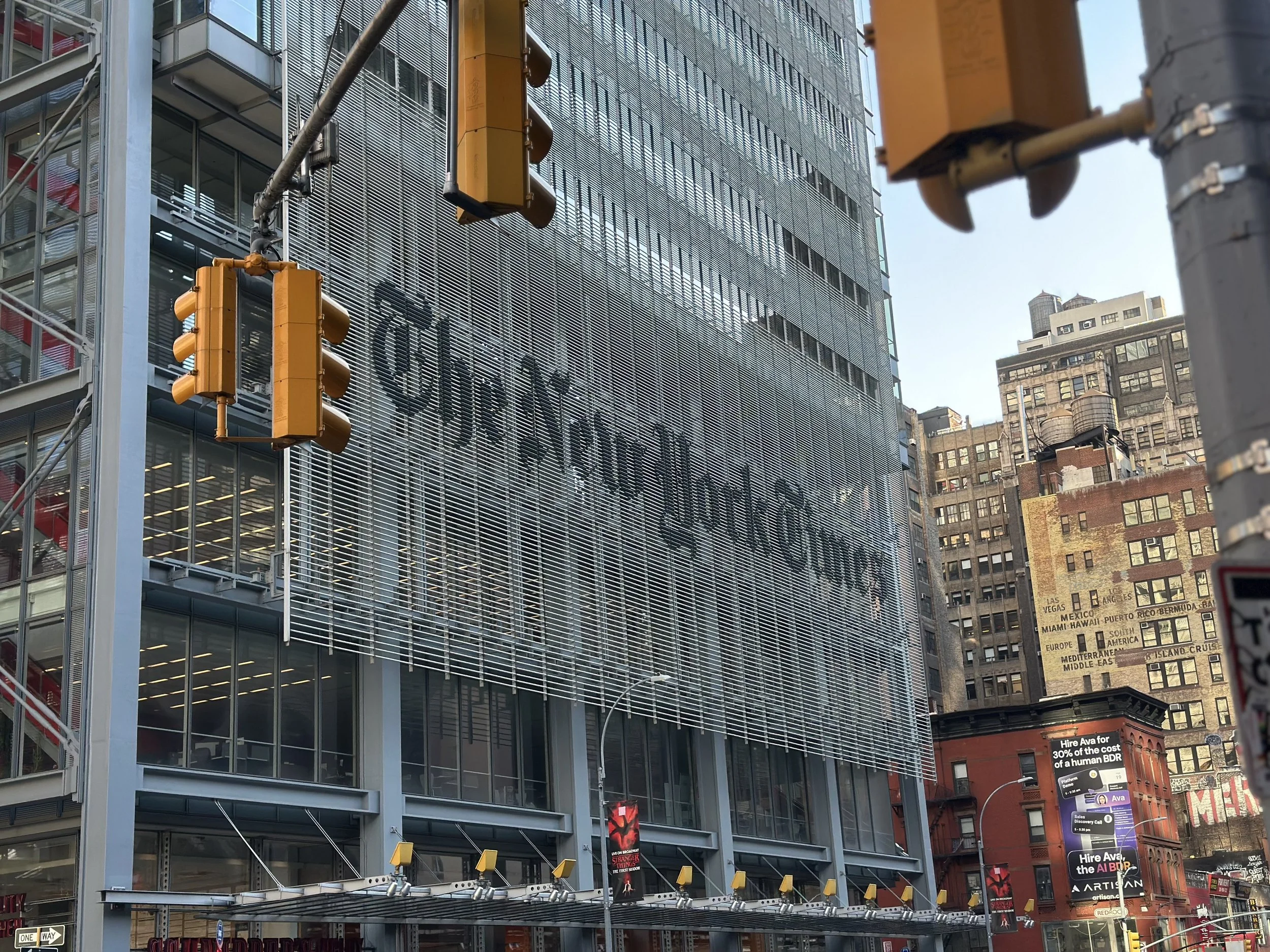
The New York Times, internationally respected for its credibility and reporting standards. Above, headquarters of The New York Times in Midtown Manhattan at 620 Eighth Ave. // Photo by Hollyann Preisel
At The New York Times, those gray areas are handled at its standards desk. On its website, the Times explains that the standards desk advises reporters on thorny editing problems, oversees ethical guidelines, safeguards independence, and helps maintain overall quality.
Investigative reporter David Fahrenthold says reporters rely on the standards desk to help navigate questions, from language choices to conflicts of interest. When he worked at The Washington Post, from 2000 to 2022, those decisions were left to editors’ judgment. Unlike The New York Times, the Post had no standards desk then. Ethical questions were typically handled directly with editors and, at times, with attorneys. The paper later expanded its policies, establishing a standards desk in late 2022 and adding rules on artificial intelligence in 2025.
Equally important, Fahrenthold adds, is having journalists who think about issues not in the code. For example, working with sources or business organizations that refuse to respond was a challenge he often faced while covering the Trump Organization and the Elon Musk Foundation. He says some organizations won’t make a case for themselves. Despite extensive outreach, they never responded. He makes the point, “How do you properly tell the story of a group that won’t tell its own story?” There is no written guideline for how to stay fair in that situation, so the journalist has to decide what fairness looks like.
It’s important that journalists develop the ethical skills to navigate new situations, regardless of what’s written in formal guidelines. As Lynn Walsh, the former SPJ president, believes, specific issues like artificial intelligence do not need to be directly addressed in the SPJ Code of Ethics. Instead, emerging technologies and challenges can be interpreted through the framework of the code’s four pillars. For instance, while AI is not explicitly mentioned in the code, Walsh’s research shows that 94% of people want journalists to be transparent about its use. In that sense, AI is still covered under the principle of transparency.
“The code wasn’t rewritten for social media,” she says. “And it won’t be rewritten for AI. It’s just different technology.”
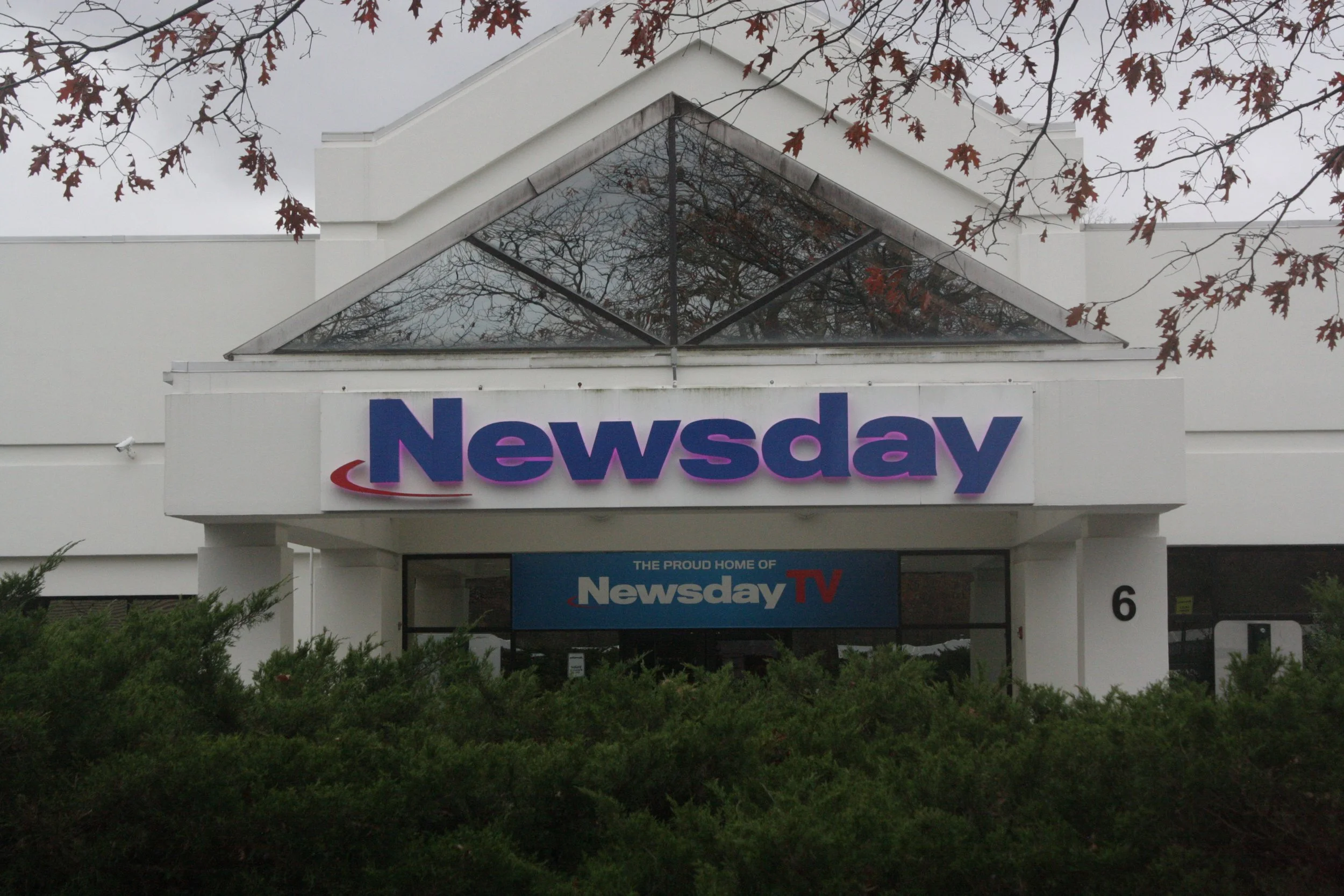
Newsday headquarters in Melville, Long Island at 6 Corporate Center Drive. // Photo by Hollyann Preisel
For Newsday TV anchor Macy Egeland, trust is still something reporters need to earn face-to-face. She says local journalism depends on showing up, getting details right, and treating people with empathy. “If you’re covering your own community, people notice when you take the time to listen and be accurate. That’s where trust comes from.”
Michael Koretzky, SPJ Ethics committee chair, sees the split in a broader way. “People say they don’t trust ‘the media,’ but they often trust their local reporter.” The distinction reflects two levels of accountability: local reporters know their audience personally, while national reporters are judged politically. In fact, people often place more trust in news personalities than in the outlets themselves nowadays. A September Hollywood Reporter/Morning Consult poll underscored this, surveying more than 80 television news anchors and influencers to determine who Americans actually listen to and trust.
The poll also highlighted the influence of nontraditional figures. Joe Rogan, for example, ranked as one of the most trusted voices among younger audiences—showing how social media personalities increasingly shape the culture of news.
In contrast, Sandrina Rodriguez, executive producer at News 12 Long Island, notices where people lose trust in journalism. She suggests that cultural behavior is now shaping how people think about news today.
Social media is both a tool and an ethical battle with clickbait in journalism. Rodriguez recalls the frenzy surrounding reports of Charlie Kirk’s assassination, where the rush for speed and emotional urgency was prioritized over the humanity of a family grieving the loss of a husband and father. In general, she says harm is often deepened when tragedy is reported quickly, without careful fact-checking. “Those stories travel so fast, and by the time you fact-check, the damage is already done.”
According to the 2025 Reuters Digital News Report, 54% of people get news mainly from social media. Speed is survival — but this rush risks misinformation and harm. The dilemma, Rodriguez said, is deciding where to draw the line between serving the algorithm and serving the audience.
Similarly, there is a line between individual harm and public good. As Walsh explains, “The public doesn’t know how journalism operates.” That gap makes it harder for audiences to see the process behind every choice: harm to one person versus benefit to many, the risk of missteps against the duty to inform. Sharing information, she notes, will almost always cause some harm. The real question is how much harm is justified by the public’s right to know.
In short, the problem is that ethics will always involve interpretation.
“Journalists know they’re supposed to have ethics,” says Koretzky. “That’s like telling people they have to floss their teeth. You already know you’re supposed to do it.”